Two-thirds of UK dental professionals describe themselves as “burnt out” according to a 2025 survey. The General Dental Council agrees, observing that occupational stress is “incredibly common among dental professionals.” Although these figures mainly refer to clinical staff, the pressure is hardly lower on the administrative side.
Increased compliance challenges have increased the workload to unprecedented levels, but there’s still a lot dental practice administrators can do to limit stress levels and burnout linked to internal processes. Among these is a smart AI phone system that gives the front desk greater autonomy over every call.
Why dental reception burnout is so common
To their great credit, most dental practice front desks betray little sign of the pressure they’re under. Perhaps that’s part of the problem. Under pressure to maintain the same standard of customer experience, they must bear a surging workload with stoicism.
However, observe a front desk in action for long enough and you’ll almost certainly spot these triggers:
- Constant interruptions to processes, usually unpredictably. Phones ring mid-task or mid-conversation, while patients will arrive for appointments at the time that suits them, not the front desk who scheduled their booking.
- There’s also the professional frustration of adapting to high staff turnover, patients who are short on patience, and the extra workload of finding and fixing errors that inevitably creep in.
- Dealing with temperamental software that adds work instead of saving time is also a bugbear, especially when it doesn’t integrate with other systems.
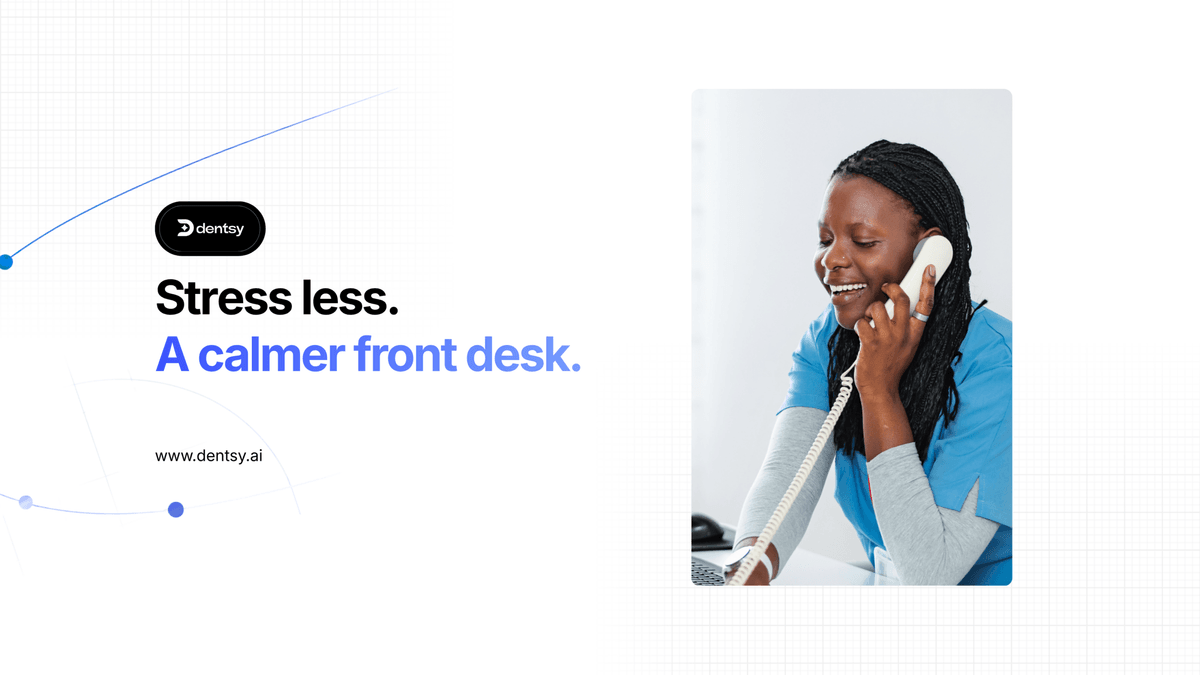
What a calm front desk looks like
Busy doesn’t always mean burnout-bound. A fully booked practice can function smoothly and quietly if the administrative engineering is designed properly. By contrast, a quiet, boutique practice can be surprisingly frantic.
The distinguishing feature is whether the front desk team is reacting to calls, arrivals or events (and struggling to keep up), or working efficiently through a plan.
A long list of callbacks is a source of anxiety when the receptionist has to find the records, note the details, and dial the number for each one. Alternatively, when all the details are in one place and each number can be dialed directly from the dashboard, the task practically runs on autopilot and the patient’s first impression is of a stress-free practice.
The phone is the biggest source of unpredictability
Administrators can block out time slots for checking voicemail, scheduling appointments in the system, updating the PMS, or preparing files for the clinical team. But calls are by nature disruptive.
They can’t be postponed. They’re harder to address in batches. And they don’t really adapt to a structured time scale. Emergency and urgent care calls push the disruption even further, with the added pressure of a distressed patient at the other end of the line.
Almost every call is an interruption – taking time away from a patient at the front desk, note-taking, or another call.
Three moments that quietly build burnout
Do stress levels peak and trough throughout the day? Overworked receptionists know that three moments in particular can send frustration soaring.
The opening salvo
In the precious minutes before the practice opens, the phones start to ring before the team has even settled. Time that could have been spent checking the email inbox, daily calendar, and task list is lost, never to return.
Mid-task requests
In-practice patients or callers aren’t the only source of interruptions. Especially when the practice is short-handed, receptionists are forced to cut into each others’ processes with urgent requests for help or missing information.
The evening reconciliation
Dread might be a strong word, but the stack of notes and patient records to update at the close of the day is rarely a task that front desk teams look forward to.
Five healthy habits of calmer practices
Look at the practices working efficiently and calmly, and it’s likely to be because someone implemented these processes.
Calls don’t all land on one person by default
If all incoming calls have to be routed from a single source, at least one person’s working day is constantly interrupted. If, on the other hand, overflows can be picked up by an AI receptionist, busy staff have breathing room.
Notes are captured automatically
An increasingly common feature on both the administrative and clinical sides of the dental business is automatic note-taking using AI. By transcribing and summarizing all calls, an AI phone system leaves the front desk free to focus fully on the conversation. When the call is over, the recording and transcript are posted automatically to the PMS, saving minutes on each call and hours over the course of the week.
Out-of-hours doesn’t mean unanswered
Patients in pain don’t wait until surgery opening times to call, and even those who don’t need urgent care often call early to beat the rush, such is the competition for available appointments. Arriving at the dental practice to find a catalogue of voicemails or missed calls sets the stress levels at maximum before the day begins.
Information is readily available
Even a small, independent dental practice might have a wide range of procedures and treatments on offer. Larger practices will certainly offer a full menu. Under new CMA guidelines, dental practices of any size need to be able to provide correct, transparent pricing and treatment details. If that information is scattered across systems, or not up to date, the stress falls on the receptionist.
There’s a plan and procedure for complaints
Callers may be in discomfort, frustrated by the lack of appointments available, or shocked at the cost of their treatment. The front desk can’t always head off that frustration from the start, but rectifying the situation is easier when there’s a clear process for handling unhappy customers. That requires a system that can actually flag negative sentiment and set next steps for whoever may have to pick up the case after handover.
How Dentsy supports a calmer front desk
Dentsy AI phone system offers a suite of innovative features that can support a proactive approach to mitigating stress. It might not be a magic wand by itself, but each tool eases the pressure enough to make a noticeable difference.
Smart Caller Pop-Up
Allows a receptionist to see who’s calling, view the context, and respond with confidence.
Automatic Call Summaries
Dentsy does all the note-taking without any input required, posting complete updates to the PMS. That cuts admin time for the front desk, and gives each receptionist confidence in the quality of the information they refer to.
AI Receptionist
Captures every call, most noticeably out of hours, reducing the unanswered call anxiety for receptionists. Instead of starting the day with flashing voicemail lights and missed calls to chase, everything is organised and tagged in the system.
Sentiment Analysis
Dentsy doesn’t just summarise the content of the call. It analyses the tone of the conversation, flagging patient dissatisfaction or confusion. That makes it much easier for managers to track recurring patterns, as well as to address gripes before they become online rants.
Calm is a system, not a personality
Emotions can run high in any patient-facing context, but calm comes from the processes underlying the conversations. When there’s less admin and shorter repetitive task lists for the front desk to address, they’re less overwhelmed and more likely to feel satisfaction in the role.
Worried about the staff burnout and stress in your dental practice?