Most dental practices know how many calls they receive. Far fewer know what those calls actually produce. Call tracking helps practices understand how many conversations lead to new patient registrations, booked appointments, treatment consultations and other valuable outcomes.
A standard phone report may show total calls, average duration and how many went unanswered. Those figures explain how busy the practice was. They do not show whether callers booked a check-up, arranged an implant consultation or became new patients.
What is dental practice call tracking?
Dental practice call tracking is the process of recording and analysing incoming and outgoing calls.
Basic reporting normally shows the caller’s number, which practice they contacted, the call duration and whether a team member answered.
More advanced call analytics can connect calls with patient records in your practice management system (PMS), enquiry types, appointments, outcomes, follow-up actions and conversion rates.
This moves reporting beyond how many calls took place and shows what those conversations achieved.
Why basic dental phone reports are not enough
A busy practice is not always a productive practice.
One practice may receive 500 calls and book 50 new patient appointments. Another may receive 340 calls and also book 50. If you only review call volume, the first practice looks busier. When you measure conversion, you can see the second practice gets more value from fewer calls.
Traditional reports also treat very different conversations equally. A dental lab checking on a case, a patient confirming their hygiene appointment and a new patient asking about Invisalign each count as one incoming call. Their value to the practice is very different.
Effective call tracking should separate routine service calls from new patient and treatment opportunities, and show how each enquiry was handled.
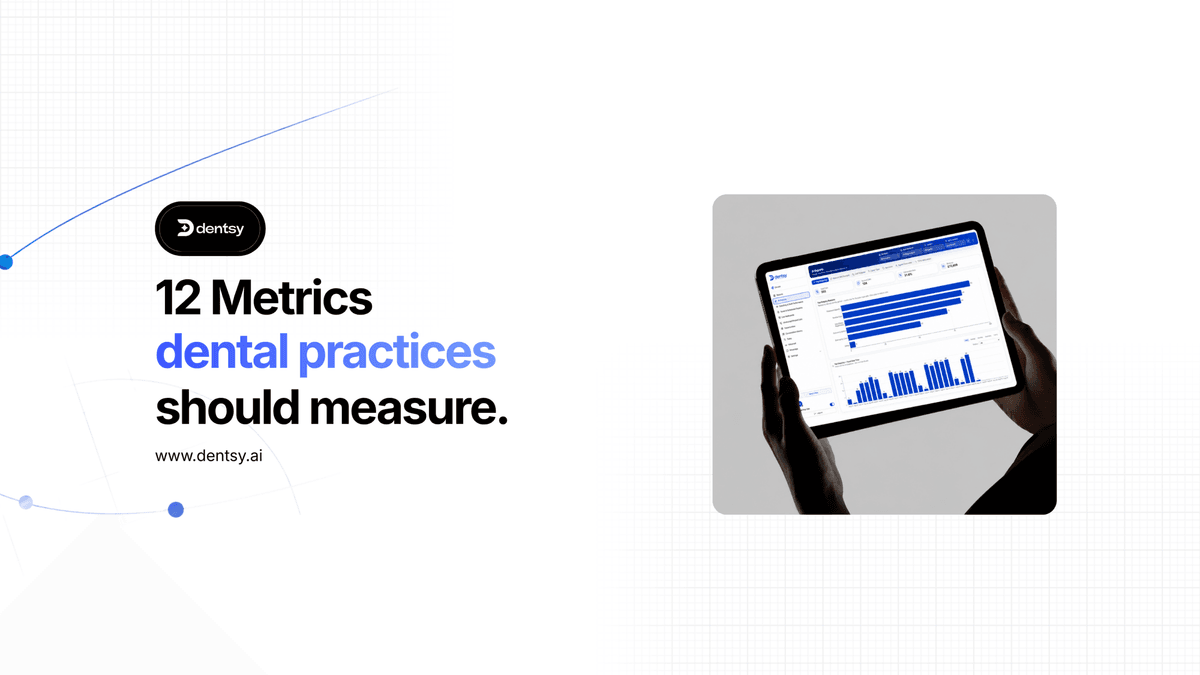
Here are 12 call metrics every dental practice should measure.
1. Total incoming and outgoing calls
Call volume gives a useful overview of activity across the practice.
Incoming call data can show when demand is highest, which practices in a group receive the most calls and whether activity rises after a marketing campaign, such as a whitening or Invisalign promotion.
Outgoing calls can show how actively the team is following up new patient enquiries, treatment plans, recalls and unanswered calls.
However, call volume should only provide context. More calls do not automatically mean more appointments or accepted treatment plans.
2. Call answer rate
Call answer rate measures the percentage of incoming calls the practice answers.
A low answer rate may point to limited reception cover, poor call routing, busy periods with no overflow support or calls going to team members who are with patients.
Review answer rates by practice, team, day and time. A healthy monthly average can still hide a high number of missed calls at opening time, over lunch or shortly before closing.
An answered call is not automatically a successful call. But answering is the first step towards booking the patient in.
3. Missed calls
A missed call happens when nobody at the practice answers an incoming call.
Practices should be able to see when it happened, which practice the caller contacted and whether the PMS already holds the caller’s details.
It is also important to separate total missed calls from unique callers. One patient calling several times should not be counted as several different opportunities.
However, repeated attempts can be a sign that the patient is frustrated or needs help soon, so they should stay visible to the team.
4. Unreturned and unresolved calls
A missed call and an unreturned call are not the same thing.
A missed call shows the practice did not answer at first. An unreturned call shows the practice did not successfully respond afterwards.
Reporting should distinguish between an attempted callback, successful contact and a resolved enquiry.
A call should not drop off the follow-up list just because one callback went unanswered.
This metric helps managers spot patients who are still waiting for a response.
5. Response and callback time
Response time measures how quickly the practice engages with an enquiry.
For answered calls, this may mean how long the caller waited. For missed calls, it is the time between the original call and the callback.
Rather than relying on one average, track how quickly the team returns calls: within 15 minutes, within an hour, the same day or the next day.
This makes delays easier to spot and gives the reception team a clear service target. It matters most for new patients, who will often call the next practice on their list.
6. New callers and existing patients
Not every call represents new business.
A useful dental call tracking system should distinguish between new patients, existing patients, parents or carers calling for a family member, and professional contacts such as dental labs, suppliers and referring dentists.
This helps managers read call volume more accurately.
One practice may receive a high number of calls because it has a large NHS patient list. Another may receive fewer calls but a greater share of new private treatment enquiries.
Understanding who is calling gives the activity more useful context.
7. Reason for the call
Knowing that a call took place is less useful than knowing why the patient called.
Common reasons include new patient registrations, routine check-ups, hygiene appointments, urgent appointment requests, cancellations and rearrangements, private treatment enquiries (such as implants, Invisalign or whitening), payment questions and messages for clinicians.
Categorising calls helps practices understand demand across the team and see which enquiries are arriving outside opening hours.
It also lets managers separate new patient and treatment opportunities from routine service and admin calls.
8. Call outcome
The call reason explains what the patient wanted. The outcome explains what the practice achieved.
A new patient enquiry might end in a booked appointment, a callback, an unsuccessful transfer or a place on a waiting list.
An implant enquiry might become a booked consultation, remain unresolved or be passed to a treatment coordinator (TCO) for follow-up.
Outcome tracking shows managers whether calls are being moved forward, not just answered.
Practices should use a clear, focused set of outcomes that reflect their real processes.
9. Enquiry-to-booking conversion rate
Conversion rate measures the percentage of relevant enquiries that become appointments or another desired result.
For example, a new patient conversion rate should compare booked new patient appointments with genuine new patient enquiries.
A treatment consultation conversion rate should compare booked consultations with genuine private treatment enquiries.
Conversion should not be calculated using every call received. That would include dental labs, existing patients confirming appointments and unrelated conversations.
Using relevant enquiries gives a more accurate picture of how well the team turns demand into bookings.
10. Booked and unbooked opportunities
Conversion rates show the percentage of enquiries that progressed. Booked and unbooked reporting shows the numbers behind that percentage.
A practice may receive 40 Invisalign enquiries, book 28 consultations and leave 12 unbooked.
Those 12 enquiries may not all be lost opportunities. Some callers may not be ready, may live too far away or may already have booked elsewhere.
However, some may stay unbooked because no suitable appointment was available, the team member did not offer one or the follow-up did not happen.
Recording the reason helps managers spot diary problems, process gaps and coaching opportunities.
11. Receptionist and practice conversion performance
Call analytics can help managers compare performance across receptionists, TCOs and practices.
Useful measures include new patient conversion, consultation conversion, callback time, missed-call follow-up and unresolved enquiries.
These comparisons should always be read in context. Different team members handle different call types, and some practices receive more private enquiries or have more appointment availability.
The purpose is to recognise what works well and identify where extra support is needed, not to create an unfair league table.
12. Revenue connected with call outcomes
The most commercially useful reporting connects enquiries and appointments with potential or actual revenue.
This may include estimated revenue from booked consultations, the potential value of unbooked treatment enquiries and revenue performance by practice, receptionist or campaign.
Managers should treat estimated revenue as a performance indicator, not guaranteed income. A consultation does not always lead to an accepted treatment plan, and a treatment plan is not always completed.
However, attaching an estimated value helps managers understand the commercial impact of missed or unconverted enquiries.
Twelve unbooked implant enquiries are easier to overlook than the treatment value they could have represented.
What should a dental practice call dashboard show?
A useful call dashboard should make problems and opportunities easy to spot.
Practice managers need a daily view of missed calls, unresolved enquiries, outstanding callbacks and appointments booked.
Weekly reporting can show call demand, answer rates, enquiry types, conversion performance and changes from the previous week.
Practice owners and group directors may need a monthly view covering bookings, conversion rates, booked and unbooked opportunities, estimated revenue and trends across practices.
The reporting period should match the action needed. A practice manager needs to know which calls need attention today. An owner needs to know whether performance is improving over time.
Common dental practice call tracking mistakes
One common mistake is measuring activity without measuring results. Total calls and call duration describe workload, but they do not show whether the conversations led to appointments.
Practices should also avoid treating every call equally. A private treatment enquiry should be analysed differently from a call from a dental lab.
Another mistake is marking calls as complete after one unsuccessful callback. Managers need to know whether the team actually reached the patient and resolved their original enquiry.
Reports should also lead to action. If nobody follows up a call, improves a process or provides coaching because of the data, the practice is collecting information without using it.
How AI improves dental practice call tracking
Traditional call tracking records what happened around the call. AI call analysis can help explain what happened during it.
An AI phone system can transcribe conversations, identify why a patient called, create summaries and pick out agreed next steps.
It can also detect appointment outcomes, analyse patient sentiment and highlight calls that need follow-up.
This reduces the need for receptionists to categorise every conversation by hand, and lets managers search for calls by what was said.
AI analysis should support management judgement, not replace it. Managers still need to consider the context of each conversation and keep performance reviews fair.
How Dentsy provides call tracking for dental practices
Dentsy is an AI phone system built specifically for dental practices.
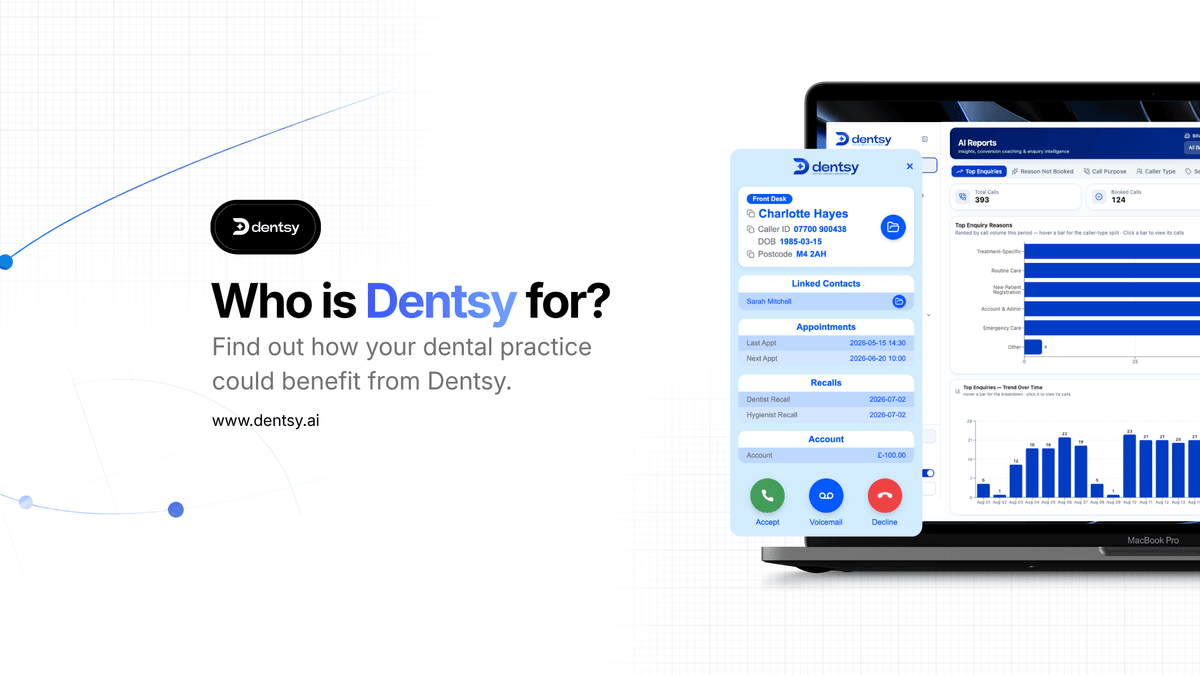
Before a call is answered, Dentsy can show caller details through its PMS integrations with Dentally, Aerona Dental and Semble. A smart caller pop-up helps the receptionist see who is calling and open the patient’s PMS record in one click.
During the conversation, calls can be recorded, transcribed and analysed. Important details, next steps and patient sentiment can be identified automatically.
After the call, Dentsy creates an AI-generated summary, adds smart tags and syncs notes with the practice’s PMS. Practices that also use Boxly or DenGro as a CRM can keep enquiry details connected there too.
Dentsy’s intelligence dashboards give practices clearer visibility of total call volumes, answered and missed calls, unreturned calls, enquiry types, bookings, conversion rates and booked and unbooked opportunities.
Managers can also review revenue by receptionist, practice performance, patient sentiment and agent scoring, giving them a fair, consistent starting point for coaching.
For practices that need extra call-answering capacity, the Dentsy AI Receptionist answers 24/7. It can handle routine enquiries, capture new patient details, book appointments and take payments when the team is busy or the practice is closed. Urgent appointments are booked according to the availability and rules the practice sets. The AI Receptionist does not give clinical advice.
Practices can use the Dentsy AI Phone System and AI Receptionist separately, or combine both to support calls handled by the team and calls answered by AI.
Move beyond basic phone reports
Dental practices do not grow simply by receiving more calls.
Value is created when conversations turn into new patient registrations, booked appointments, treatment consultations and accepted treatment plans.
Call volume still matters, but it is only the beginning.
Effective dental practice call tracking connects each conversation with its caller, purpose, outcome and next action.
It helps managers move beyond asking:
“How many calls did the practice receive?”
Instead, they can ask:
“Which calls created opportunities, which ones converted and what can we improve next time?”
That is the difference between a basic phone report and genuine call intelligence.
See how Dentsy can turn your practice’s calls into clear actions, measurable outcomes and useful insight. Book a live demo and free quotation today.
Frequently asked questions
What is dental practice call tracking?
Dental practice call tracking records and analyses incoming and outgoing calls. More advanced systems can connect conversations with patient records, appointments and outcomes in the practice management system.
Which call metrics should dental practices measure?
Dental practices should measure call volume, answer rates, missed calls, unreturned calls, callback times, enquiry reasons, call outcomes, conversion rates and booked versus unbooked opportunities.
Why is call volume not enough?
Call volume only shows how busy a practice is. It does not show whether calls led to new patient registrations, booked appointments or treatment consultations.
What is a dental practice call conversion rate?
A call conversion rate measures the percentage of relevant enquiries that lead to a desired outcome, such as a booked new patient appointment or treatment consultation.
How does AI improve dental call reporting?
AI can transcribe calls, identify enquiry types, create summaries and detect outcomes or follow-up actions. This gives managers greater visibility while reducing manual admin for the reception team.
Can dental call tracking connect with a PMS?
Yes. A PMS-integrated phone system can connect callers, notes, recordings and outcomes with the correct patient record. Available features depend on the PMS integration.